
.png)
Articles
Influencer Sign up
I want to try Influeri
for free as...
I am...
The Future CMO Will Run Creator Marketing Like Paid Social
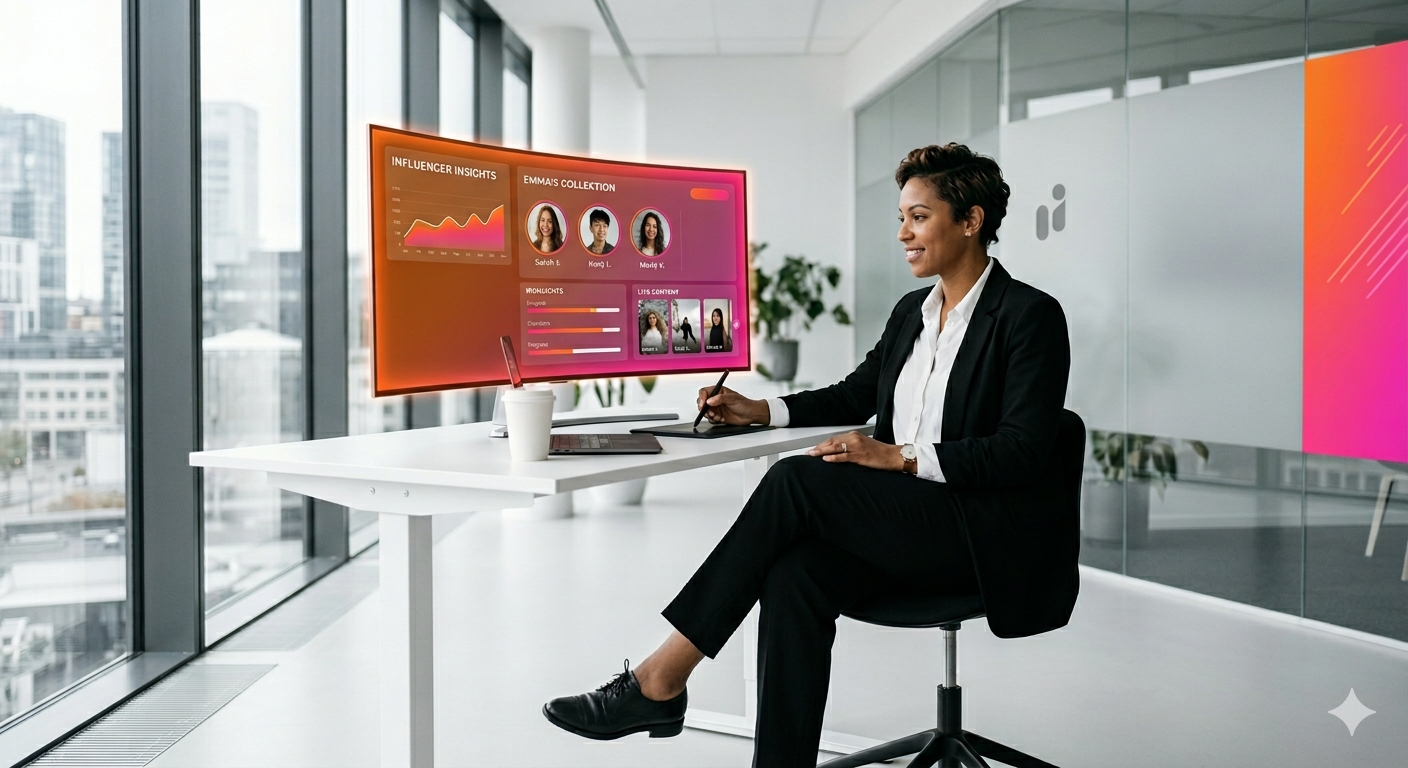
For years, creator marketing has operated differently from the rest of modern marketing.
Paid social became:
- measurable
- scalable
- optimized in real time
- performance-driven
- automated
Creator marketing did not.
Instead, most brands still run creator campaigns through spreadsheets, email threads, manual creator sourcing, PDF contracts, disconnected agencies, and endless operational coordination.
But that model is starting to break.
Fast.
And I believe the next generation of CMOs will no longer treat creator marketing as a separate “creative experiment.”
They will run it like paid social.
Not because creativity disappears.
But because infrastructure is finally catching up.
Creator Marketing Is Following the Same Path as Paid Media
Think about paid advertising 15 years ago.
Media buying used to be highly manual:
- negotiating placements
- buying banners directly
- manually selecting publishers
- waiting weeks for reports
Then platforms like Meta and Google changed everything.
Campaigns became:
- self-serve
- data-driven
- instantly scalable
- algorithmically optimized
The operational friction disappeared.
The same transformation is now happening in creator marketing.
The old model looked like this:
Brand → Agency → Talent Manager → Creator → Manual Coordination
The new model increasingly looks like this:
Brand → AI Infrastructure → Creator Network
That changes everything.
The “Dispatcher Layer” Is Being Automated
A huge part of the creator marketing industry is still built around operational coordination.
Not strategy.
Not creativity.
Coordination.
Finding creators.
Sending outreach.
Negotiating rates.
Managing approvals.
Chasing invoices.
Tracking deliveries.
Collecting analytics.
Launching boosts.
Building reports.
In 2026, AI can now automate large parts of this workflow.
And once operational friction disappears, creator marketing starts behaving much more like paid media.
This is the shift most of the industry is underestimating.
Future CMOs Won’t Ask:
“Which Influencer Agency Should We Hire?”
They’ll ask:
- Which creators are driving the highest ROAS?
- Which audience segments are underperforming?
- Which creator archetypes convert best by market?
- Which videos should receive additional paid distribution?
- Which creators should we retain long-term?
- Which content patterns correlate with conversion?
This is performance marketing logic.
Applied to creators.
Creator Marketing Is Becoming an Optimization System
Today, most creator campaigns are still treated as isolated projects.
A launch.
A campaign.
A burst.
But future creator marketing teams will operate more like growth teams:
- always-on creator pipelines
- real-time performance allocation
- automated creator testing
- AI-based creator recommendations
- dynamic budget allocation
- creator retention systems
- content scoring models
- instant global scaling
The workflow starts looking far closer to Meta Ads Manager than a traditional influencer agency.
That’s a massive shift.
The Winning Brands Won’t Be the Ones With the Biggest Creators
They’ll be the ones with the best systems.
The biggest misconception in the industry is that creator marketing success comes from finding “the perfect influencer.”
In reality, long-term success comes from:
- testing velocity
- creator diversity
- audience matching
- content iteration
- scalable infrastructure
- distribution intelligence
The future enterprise and media agency winners will not manually coordinate 20 creator relationships.
They will orchestrate thousands of creator interactions through infrastructure.
Just like paid social teams can manage thousands of ads.
Creativity Does Not Disappear
This is where many people misunderstand the shift.
AI will not replace great creators.
If anything, strong creators become more valuable.
But operational labor around creators becomes dramatically less valuable.
The future creator economy will reward:
- authentic personalities
- strong storytelling
- trust
- culture
- creativity
While simultaneously automating:
- sourcing
- administration
- reporting
- contracting
- workflow management
- scaling decisions
In other words:
human creativity becomes the premium layer.
Operational coordination becomes software.
The Line Between Creator Marketing and Paid Social Will Blur
This is already starting to happen.
The best-performing creator campaigns today are increasingly:
- boosted
- whitelisted
- performance-tracked
- iterated rapidly
- optimized based on conversion data
The creator is becoming both:
- a media channel
- and a creative production layer
That means future creator budgets may no longer sit only with “brand teams.”
They may increasingly move into:
- growth teams
- performance marketing teams
- acquisition teams
Because creator content is becoming one of the most effective forms of modern advertising.
Most Enterprise Creator Programs Are Not Built for This Future
Many large companies still operate creator marketing through fragmented systems:
- spreadsheets
- email approvals
- disconnected agencies
- finance bottlenecks
- legal bottlenecks
- scattered creator databases
That setup cannot scale globally.
Especially not when creator marketing becomes:
- always-on
- performance-driven
- AI-assisted
- cross-market
- deeply integrated into growth strategy
Infrastructure becomes the competitive advantage.
The Future CMO Will Not See Creator Marketing as “Influencer Marketing”
They will see it as:
- scalable trust distribution
- creator-led advertising
- AI-powered content infrastructure
- decentralized brand storytelling
And they will manage it with the same rigor, dashboards, optimization loops, and scalability mindset that transformed paid media over the last decade.
That future is arriving much faster than most people think.

